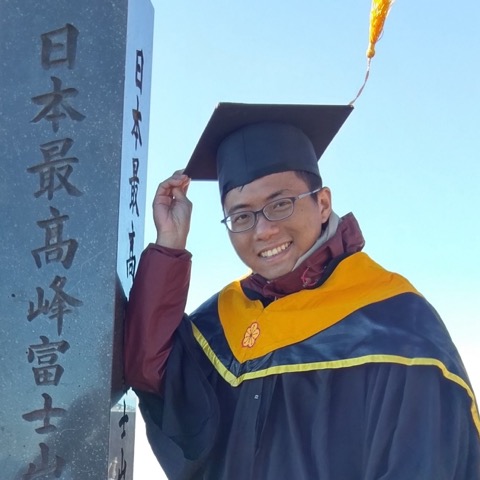
Yu-Wen Chen
Machine Learning Researcher · Physical AI & Satellite Remote Sensing
PhD, Atmospheric & Oceanic Sciences · University of Colorado Boulder · NASA FINESST Graduate Fellow
My research centers on 3D radiative transfer and its applications to satellite remote sensing of greenhouse gases and cloud–surface interactions, with Prof. K. Sebastian Schmidt in the Department of Atmospheric and Oceanic Sciences at the University of Colorado Boulder. I co-developed the Education and Research 3D Radiative Transfer Toolbox (EaR3T) to mitigate cloud-induced biases in CO₂ retrievals from NASA's OCO-2 satellite, and I conduct airborne observations in the Arctic to study how clouds modulate the sea ice energy balance.
Research
3D Radiative Transfer Modeling
Co-developing the Education and Research 3D Radiative Transfer Toolbox (EaR3T) to simulate how three-dimensional cloud fields scatter and absorb solar radiation, enabling physically realistic modeling of the radiation environment observed by satellites.
Satellite CO₂ Bias Correction
Applying 3D radiative transfer calculations to mitigate cloud-induced biases in CO₂ retrievals from NASA's Orbiting Carbon Observatory-2 (OCO-2), improving the accuracy of global carbon cycle monitoring from space.
Arctic Cloud–Surface Interactions
Investigating how clouds regulate the radiative energy balance over Arctic sea ice using airborne observations from the ARCSIX campaign. Cloud-induced surface warming may be systematically underestimated by passive satellite-derived products.
Atmospheric Chemistry & Air Quality
Applying supervised machine learning to identify key drivers of ground-level ozone formation in Taiwan, and conducting aircraft–ground intercomparisons of aerosols and pollutants near major pollution sources.
Research Highlights
Publications
Published
-
Mitigation of satellite OCO-2 CO₂ biases in the vicinity of clouds with 3D calculations using the Education and Research 3D Radiative Transfer Toolbox (EaR3T)Atmospheric Measurement Techniques, 18, 1859–1884 (2025) DOI →
-
Investigating variable importance in ground-level ozone formation with supervised learningAtmospheric Environment, 119148 (2022)
-
The Roles of Local Circulation and Boundary Layer Development in Tracer Transport over Complex Topography in Central TaiwanJournal of the Meteorological Society of Japan, 100, 555–573 (2022)
-
Quantification of glucose via in situ growth of Cu₂O/Ag nanoparticlesSensors and Actuators B: Chemical, 285, 224–231 (2019) DOI →
-
Porous aluminum electrodes with 3D channels and zig-zag edges for efficient hydrogen evolutionChemical Communications, 55, 5447–5450 (2019) DOI →
-
Smart app-based on-field colorimetric quantification of mercury via analyte-induced enhancement of the photocatalytic activity of TiO₂–Au nanospheresAnalytical and Bioanalytical Chemistry, 410, 4555–4564 (2018) DOI →
-
Fe₂O₃/Al₂O₃ microboxes for efficient removal of heavy metal ionsNew Journal of Chemistry, 41, 7751–7757 (2017) DOI →
Accepted (In Final Revision)
-
Bias in satellite-derived cloud radiative effect over Arctic sea ice relative to aircraft measurements during ARCSIXAtmospheric Chemistry and Physics (accepted 2026, in final revision)
In Review
-
The Arctic Radiation-Cloud-Aerosol-Surface Interaction Experiment (ARCSIX) airborne campaign datasetEarth System Science Data Discussions (2026)
-
High Arctic Sea Ice Albedo Shifts Cloud Radiative Effect Toward Surface WarmingGeophysical Research Letters (submitted 2026)
In Preparation
-
Correcting cloud-proximity biases in OCO-2 XCO₂ with photon path-length statistics and deep ensembles, validated against TCCON, aircraft, and shipborne observationsJournal of Quantitative Spectroscopy and Radiative Transfer (2026)
Talks
Oral Presentations (* presenting author)
-
Diagnosing and Correcting Cloud-Proximity Biases in OCO-2 XCO₂ with Photon Path-Length Statistics
-
Spring- and Summertime Airborne Observations in the Arctic Suggest Prolonged Cloud-Induced Surface Melt
-
Introduction and Demonstration of the Education and Research 3D Radiative Transfer Toolbox (EaR3T)
-
Mitigation of Cloud-induced Biases in CO₂ Remote Sensing
-
Spring- and Summertime Airborne Observations in the Arctic Suggest Prolonged Cloud-Induced Surface Melt
Show 7 earlier oral presentations
-
Spring- and Summertime Airborne Observations in the Arctic Suggest Prolonged Cloud-Induced Surface Melt
-
Spring- and Summertime Airborne Observations in the Arctic Suggest Prolonged Cloud-Induced Surface Melt
-
Correcting Cloud-induced Biases in CO₂ Remote Sensing
-
The Impact of Polarization on OCO-2 Bias Mitigation in the Vicinity of Clouds
-
Satellite 3D Radiance Simulator for the OCO-2 Mission and its Application to the Mitigation of Spectroscopy Retrieval Biases in the Vicinity of Clouds
-
Investigating Ground-level Ozone Formation: A Case Study in Taiwan
-
Quantitation of glucose through its manipulation of the growth of Cu₂O/Ag nanoparticles
Poster Presentations (* presenting author)
-
Investigating 3D Cloud Radiative Effects on High-Resolution Trace Gas Spectra to Elucidate the Mechanisms of Land-Ocean Retrieval Biases
-
The Impact of 3D Cloud Radiative Effect on Trace Gas Retrievals: Bridging the Gap from Low Earth Orbit to Geostationary Missions
-
Cloud-Induced Warming of Spring and Summer Arctic Sea Ice is Likely Underestimated by Passive Satellite Imagery Derived Products
-
The Impact of Polarization on OCO-2 Bias Mitigation in the Vicinity of Clouds
-
Mitigation of OCO-2 CO₂ Biases in the Vicinity of Cloud
Show 6 earlier poster presentations
-
Mitigating the Impact of Three-Dimensional Cloud Effects on CO₂ Retrievals for Various Surface and Cloud Types Using a 3D Radiance Simulator
-
Mitigation of Satellite OCO-2 CO₂ Biases in the Vicinity of Clouds with 3D Calculations
-
The Impact of Clouds on the Orbiting Carbon Observatory-2 Satellite Trace Gas Retrievals
-
Mitigation of OCO-2 Spectroscopy Retrieval Biases in the Vicinity of Clouds
-
Intercomparison of aircraft and ground based measurements of pollutants and aerosols near major pollution sources over Taiwan
-
Quantitation of Glucose through its Manipulation of the growth of Cu₂O/Ag Nanoparticles
Teaching
- Assisted in general affairs for 350 undergraduate students
- Led weekly lecture review and exam study guide
- Instructed three high school students on fuel cell research; students received Advanced Honor in the Young Scientists Development Program
- Assisted in general affairs for 160 undergraduate students
- Led weekly lecture review and discussion for study groups
- Led weekly experiment review and guided laboratory experiments